Background
Clarity and control across growth, scale, and complexity
Built from experience inside the business—not outside it.
As businesses grow, complexity increases faster than visibility.
Decisions spread. Systems evolve independently.
What leaders see becomes filtered—and harder to trust.
This is where my work sits.
My Story
I didn't start as an advisor. I started as a founder — building businesses from scratch, without external investment, learning what it actually takes to keep people, clients, and operations moving in the same direction while the pressure is real.
That experience became IT Directorship, an executive-level advisory practice built on a simple belief: that organizations deserved better leadership than what was typically available to them.
Wheaton Precious Metals was the first client to give us a real chance. That relationship lasted eighteen years — through their growth from an emerging company into one of Canada's most recognized publicly traded enterprises.
It taught me something I haven't forgotten: trust, built carefully and maintained consistently, compounds. It becomes the thing the relationship is actually built on.
Over time, the practice grew to serve dozens of organizations across mining, finance, professional services, and industrial sectors. In 2019, The Tech Valet was sold. In 2025, IT Directorship was acquired by Terra Dygital. Both transitions were deliberate, and on our terms.
Following the sale, I moved into a senior executive role with Akaliko Global — first as Chief of Staff, then as Chief Administrative Officer — responsible for the operating systems of a globally distributed industrial organization spanning more than twenty countries. Being directly inside something complex and demanding is clarifying in a way advisory work alone cannot be.
Across all of it, the challenge has been consistent: not growth itself — but maintaining clarity, alignment, and control as complexity increases.
Where I Work
Experience across industries, cultures, and operating environments.
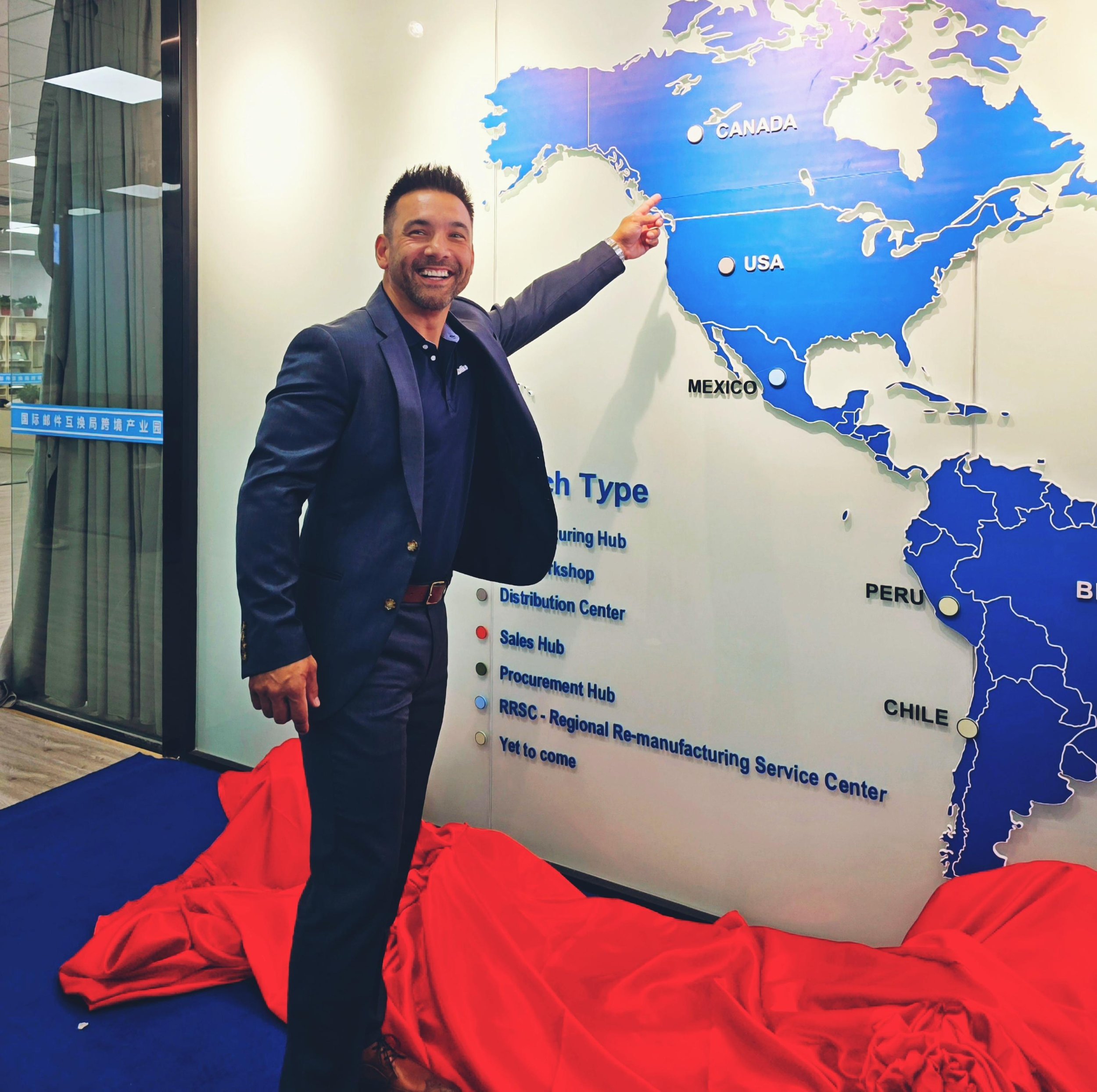
I am based in Canada and spend time working directly with businesses—particularly across Southeast Asia, including Thailand and Singapore, with extended connections into China.
This provides direct, ground-level understanding of how businesses operate in practice—across teams, regions, and cultures.
How I Work in Practice
Working Relationship
Most of my work happens alongside ownership and leadership teams—embedded enough to understand how the business actually operates, but independent enough to see what others may not.
It is not structured around formal engagements or predefined outputs, but around building context over time—understanding how decisions are made, how the organization functions, and where clarity, alignment, or control can be strengthened.
In some situations, this extends to working directly with owners or alongside the board—providing an external perspective grounded in operational reality, while supporting alignment and decision-making at the leadership level.
I see what others may not—because I am not inside the system, but I work within its reality.
-
I typically work alongside ownership and leadership over time—building a practical understanding of how the business actually operates and evolves as complexity increases.
Engagements can take different forms depending on the business, the stage of growth, and where support is most valuable. In some cases, this may begin with a focused assessment or period of observation, and gradually evolve into a longer-term advisory relationship.
The approach remains consistent: close, practical, independent, and grounded in the reality of the business.
-
I am based in Canada but spend time on the ground with the businesses I work with.
Being present provides a clearer view of how the organization actually operates—across teams, locations, and day-to-day decisions.
Between visits, communication continues as needed—but the relationship is built through direct engagement, not remote-only interaction.
-
It depends on what is needed.
In some situations, my role is primarily observational—helping leadership step back and see what is actually happening more clearly.
In others, I am more directly involved in working through decisions, structure, and alignment alongside the team.
The intention is not to take over—
but to strengthen clarity, alignment, and how the business operates. -
Occasionally, my involvement may extend closer to ownership or the board.
This is not typically defined as a formal operating role, but as an extension of the working relationship—
providing perspective, supporting alignment, and contributing to decision-making where it matters. -
In some situations, yes—typically where there is long-term alignment with ownership.
My work is not driven by capital, but by understanding how the business operates and strengthening clarity, structure, and performance.
Where that foundation exists, there may be opportunities to participate more directly.
-
Most conversations start informally—often around a specific challenge, or a moment where the business is becoming more complex.
Where it makes sense, this leads to a focused, on-site Owner’s Lens Assessment—
providing a clear, grounded view of how the business is actually performing.From there, we determine whether it makes sense to continue working together.
-
You can explore more detail on how I work here: My Approach